Hey Neofin community 👋
Welcome to the very first post of my new CTO’s column — a place where I’ll be sharing behind-the-scenes stories, hard-learned lessons, and the kind of technical insights that usually live deep inside our Slack threads (and occasionally, in caffeine-fueled rants).
This won’t be a glossy PR space. No fluff, only expect direct takes, a bit of sarcasm, and a lot of honesty about what it actually takes to build fintech infrastructure that works.
So, let’s start with the biggest one: a look back at 2025 — the year that tested us, toughened us, and pushed Neofin to its next level.
Today I’m going to follow my favourite 3-2-1 framework — this time in writing, not speaking.
One Thing
Two Types
Three Steps
Before we start, let’s put our ducks in a row.
Looking back at this year, I didn’t have enough time to share my thoughts and expertise.
I feel this year has made my skin thicker — in the best possible way.
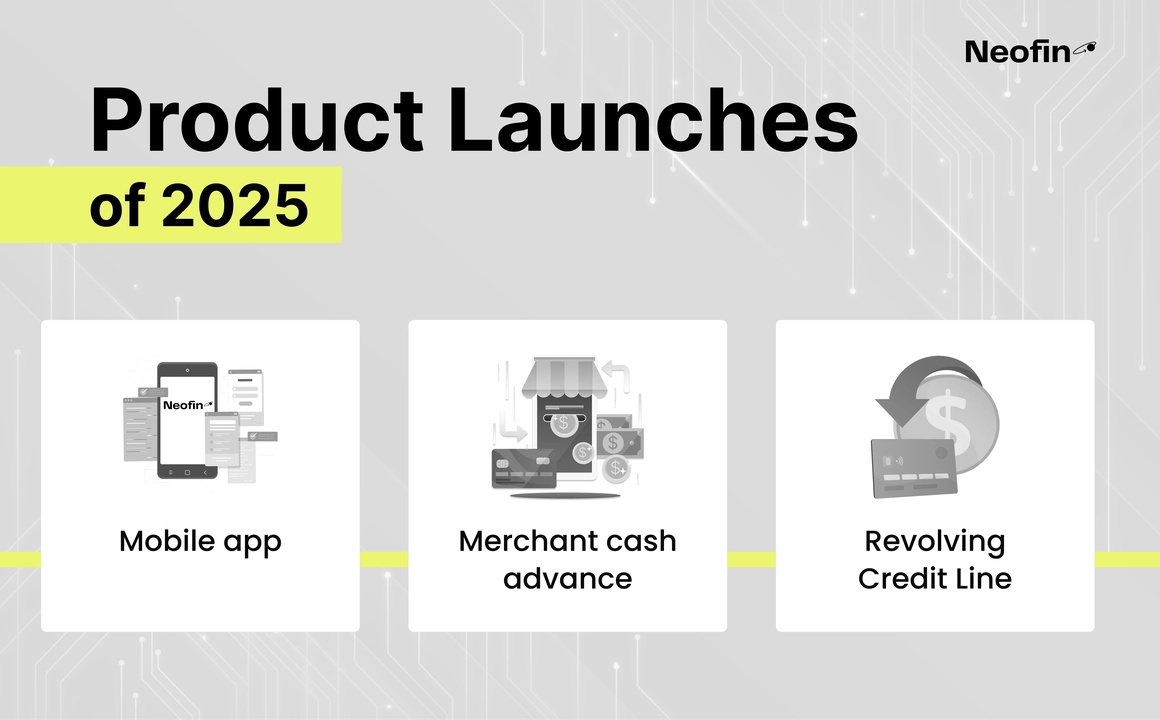
This year our team has been developing a mobile app. We assembled a new team division strongly focused on Flutter. Over the last 12 months, we worked like draft horses to get things done. It was tremendously different from what we delivered before for our partners’ projects, where parts of Neofin were simply built into their mobile apps.
It took more time than I imagined — that’s for sure — but against all odds, our mobile stack is finally ready to be rolled out!🎉
Thank you, Neofin SpaceShip team, for being with us on this ride. We’ve done a great job.
We launched two new loan products in our Loan Management System:
Merchant Cash Advance, and
Revolving Credit Line.
(And yes, I’m staying silent about Digital Wallet — we’re not at the right moment for that yet 😉).
These two new products put us on the spot because we needed to adjust schedule calculations literally on the fly as customers were scaling in production. Two new products at the beginning of 2025 — at the same time. We pushed Neofin to its limits.
And we found out: there are no limits.
Sometimes during product demos everything looks smooth, but once the agreement is signed and development starts, we realize our client’s product is very different from anything we’ve done before.
I have to mention the team again — they’re real troopers.
We made our LMS more flexible and more adaptable for our prospects.
Now, we can call ourselves agnostic — in all aspects:
🌎 GEO-agnostic
🔤 Language-agnostic
⚙️ Loan-product-agnostic
⏰ Schedule-agnostic
How did we get to the point of launching a totally new stack and two new products already fully functional in production?
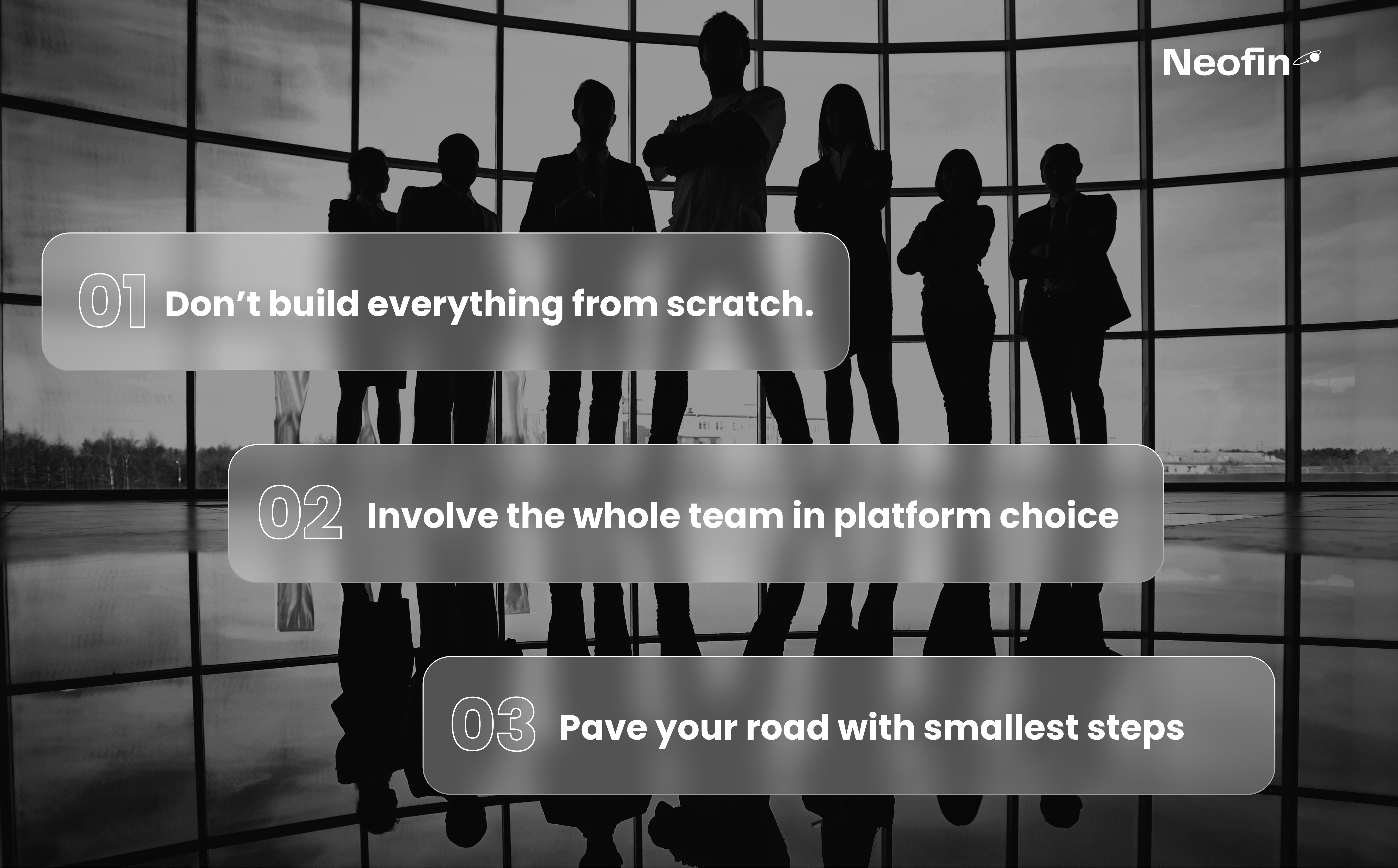
Here are my 3 practical steps for businesses planning to launch a fintech product in 2026.
Step #1 — Don’t build everything from scratch.
If you think you’re the most technical CTO in the world and you’ll outperform competitors because of your GitHub repo — respect for the ambition!
But imagine the perks of actually launching on budget and on time.
Use self-hosted or open-source solutions to move faster.
Do it today — otherwise, you risk being replaced by AI in the future.
Before signing with a self-hosted or SaaS platform, invite your whole team to the demo.
Ask them about their pains. Ask them about their UX.
This year I realized that even if your software is the best in class, if upper management doesn’t involve the sales staff in the selection process, you as a vendor can easily fall into a UX trap.
And the exit can be very, very long.
Pave your road with small, viable sections of product.
Put only the features on your roadmap that you can truly launch today — at this kilometer of the journey.
If you need to report progress to budget-holders, this is the only way to succeed.
If you think you can pave the entire road in one sprint, you’ll probably be replaced by AI too 🙂.
The tech world has no magic wand or deadline fairy.
We’re human beings — we must be creative.
We just need the right tools in our hands to deliver fintech products reliably and inevitably.
To wrap it up
2025 was the year we proved that adaptability beats perfection, that collaboration wins over ego, and that progress happens in small, relentless steps.
If this kind of honest tech storytelling resonates with you — stay tuned.
This CTO’s column will be my new playground for sharing what’s next: from architecture choices to product philosophy to fintech war stories we all learn from.
See you in the next one 🚀